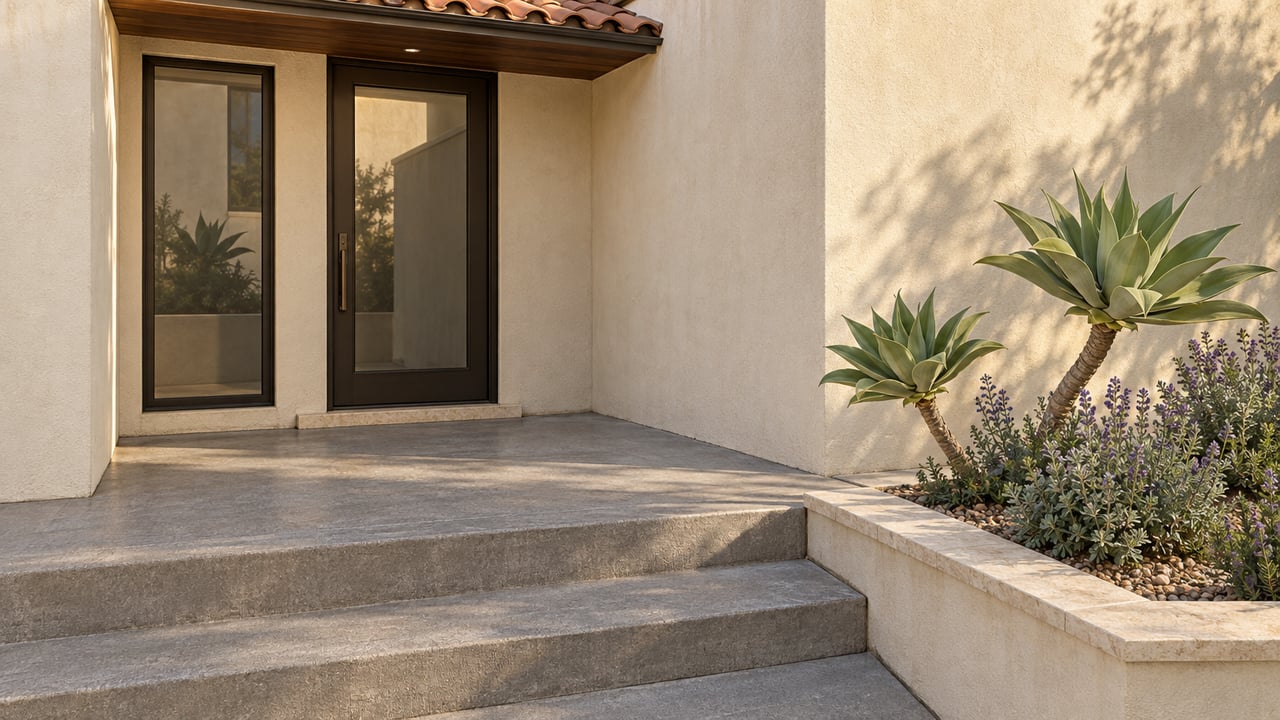
Selling a Laguna Niguel Condo This Fall? The 2026 Paperwork Changes That Now Show Up in Escrow
Until this year, a Laguna Niguel condo seller could treat the HOA packet as a stack of documents to collect after the price was agreed. Two changes in 2026 moved those documents earlier. Since January 1, a California seller has to give the buyer the latest balcony inspection report as part of the HOA disclosure package. Since August 3, Fannie Mae no longer lets lenders use its lighter review process for established condo projects. Together, these mean the association's records now affect who can buy a unit and how they pay for it, and that happens before the buyer reaches the appraisal.
As of August 2026, Orange County's attached and detached markets are moving in different directions. The Orange County REALTORS August 2026 snapshot shows these year-over-year changes:
| August 2026, year over year | Attached (condos, townhomes) | Detached |
|---|---|---|
| Median sales price | -0.7% | +3.7% |
| Homes sold | -12.3% | -3.9% |
| Days on market | +5.1% | -8.6% |
| Months of available inventory | +10.8% | -13.5% |
The California Association of Realtors' August 2026 release has a firmer detached picture for the county. It puts the August median at $1,452,500, up 4.9% from a year earlier, with 3.1 months of inventory and a 27-day median time on market. The two groups measure differently. C.A.R. surveys Realtor associations, and Orange County REALTORS uses regional MLS data. That explains why one reports 3.7% detached growth and the other 4.9%. Both show the same split, though.
Neither source explains why attached sales fell more than 12%. No public data isolates Laguna Niguel's own attached segment either, because the county association's city-level reports sit behind a member login. What can be documented is that condo transactions picked up new steps this year, and each step gives a deal another chance to stall.
California Civil Code Section 4525 lists what an owner has to give a prospective buyer "as soon as practicable" before title transfers. That list includes the governing documents, the association's annual budget materials, a written statement of current regular and special assessments, any unresolved violation notices, and any assessment increases the board has approved that aren't due yet. In 2025 the Legislature added an eleventh item through SB 410, effective January 1, 2026: "A copy of the report issued pursuant to the most recent inspection conducted pursuant to Section 5551."
Section 5551 is the balcony law most people know as SB 326. It applies to association-maintained balconies, decks, stairs and walkways more than six feet above ground that rely on wood for load-bearing support. A licensed structural or civil engineer, or an architect, has to inspect a statistically significant sample of those elements at least once every nine years. The first inspection deadline was January 1, 2025, and current code doesn't extend it.
Here's what a buyer reads in that report:
SB 410 also changed how the report is laid out, requiring certain content on its first page. In practice, that puts the inspector's main findings where a buyer sees them first.
The budget materials in the same packet cover related ground from the money side. The annual budget report has to state reserve balances, any major repairs the board has deferred and why, and whether special assessments are expected, with an estimated amount, start date and duration. It also covers insurance summaries and whether the project holds FHA or VA approval. A buyer can now set the engineer's repair recommendations beside the board's reserve plan and check whether the two match.
Before August, many established condo projects could get through Fannie Mae's Limited Review, a lighter process. Fannie Mae's Lender Letter LL-2026-03 retired it. For loan applications dated on or after August 3, 2026, established projects have to go through a Full Review or qualify for a waiver of project review. So a buyer applying this month for a condo loan that has to meet Fannie Mae's requirements falls under the new rules.
Several other changes in the same letter tighten the timeline further:
| Applies to loan applications dated | Fannie Mae change |
|---|---|
| On or after July 1, 2026 | Master-policy deductible capped at $50,000 per unit. If the master policy has a per-unit deductible or leaves any interior uncovered, the borrower has to carry unit-owner coverage. |
| On or after August 3, 2026 | Limited Review retired. When a reserve study is used to support the budget, lenders must use the study's highest recommended reserve allocation, and the baseline funding method is no longer permitted. |
| On or after January 4, 2027 | Minimum replacement reserve allocation rises from 10% to 15% of annual budgeted assessment income for Full Reviews. |
Fannie Mae's Selling Guide treats a project as ineligible when critical repairs materially affect safety, structural integrity, habitability, financial viability or marketability. Its examples include advanced deterioration, water intrusion and failed mandatory safety inspections. If a special assessment is paying for a critical repair, the project stays ineligible until the work is done, and lenders are directed to review recent structural inspection reports.
That means the balcony report the buyer receives under Section 4525 and the inspection records an underwriter asks for under a Full Review often cover the same building condition. Sellers in 2026 no longer have a separate disclosure timeline and lending timeline. The same documents feed both.
The January date matters for anyone listing now. A Laguna Niguel condo that goes on the market in mid-October and draws an offer after the holidays could have a buyer whose loan application is dated after January 4, 2027. If that loan has to meet Fannie Mae's requirements and the project goes through a Full Review, the lender applies the 15% reserve floor to the association's budget.
This affects Laguna Niguel more than a typical city because so much of its attached housing sits inside master-planned communities with more than one association. The city's own HOA map, dated 2013, shows how the layers fit together. Its unit counts are historical, but the structure is what matters here.
When a unit belongs to both a sub-association and a master association, each one can have its own governing documents, budget, assessments and insurance. No public report has surfaced of a 2025 or 2026 balcony repair, special assessment or insurance problem at any named Laguna Niguel association. Nothing here suggests any of these communities has one. The point is how much paperwork is involved. In a layered community, the documents a buyer reads and an underwriter checks can come from two boards on two schedules.
Section 4530 covers the timing. Once an owner sends a written request, the association has 10 days to deliver the requested documents. It can charge a reasonable fee based on actual cost, has to estimate and itemize that fee, and can't add a charge for electronic delivery. A seller can also hand over current documents they already have at no cost.
A Los Angeles Times report from October 2, 2026 describes what happens when a building's condition and its reserves don't match, including a large emergency roof assessment at a San Clemente condo community. In that article, Michael Kushner, an attorney who specializes in HOA law and typically represents homeowners, said he has heard of more emergency assessments over $20,000 per unit in recent years, often for long-overdue upgrades. He added that the state's balcony inspections have led to many expensive repair jobs. The Times also said the chance of fees like these may be one factor in buyers' waning interest in condos.
Fannie Mae's own March 2026 letter cites rising premiums and limited insurance availability as challenges for borrowers and associations. The new rules don't create these costs. They bring the costs into view earlier in the transaction, at the point where a buyer is deciding whether to keep going.
For a Laguna Niguel condo listed this fall, here's the order in which these documents usually come into play:
Does a clean result in Fannie Mae's Condo Status Finder mean the project is approved? No. Fannie Mae says a "No findings" result doesn't mean the project was reviewed or approved. The tool only shows known ineligible conditions.
If an FHA case number is issued, is the condo FHA-approved? HUD's May 2026 system change lets some projects with expired status receive automatic case-number assignment, and HUD states that a case number is not project or unit approval.
Who pays for the HOA documents? Under Section 4530, the seller is responsible for the document-provision fees and doesn't have to buy every optional item on the association's fee form.
If you own a condo or townhome in Rancho Niguel, Beacon Hill, Marina Hills or any other Laguna Niguel association, Judy Parsons can help you gather and review your master and sub-association documents, including the balcony report, before your listing goes live. That way the buyer's first look at those documents isn't also yours. Book a complimentary home strategy session.
This article is general information, not legal, tax or financial advice. Consult a qualified professional about your situation.

Get assistance in determining current property value, crafting a competitive offer, writing and negotiating a contract, and much more. Contact me today.
JUDY PARSONS | CA DRE# 02191105
33522 Niguel Rd Dana Point CA 92629