The 18 Acres Above the Pool Most Laguna Niguel Residents Have Never Actually Walked
Ask a longtime Crown Valley Park regular how many times they've swum laps at the Aquatics Center, caught a summer concert at the amphitheater, or waited on a bench outside the YMCA while a kid finishes practice. The number climbs into the hundreds for most people who've lived here more than a year or two. Ask the same person how many times they've walked the trail that starts directly above all of it, and the honest answer is usually zero.
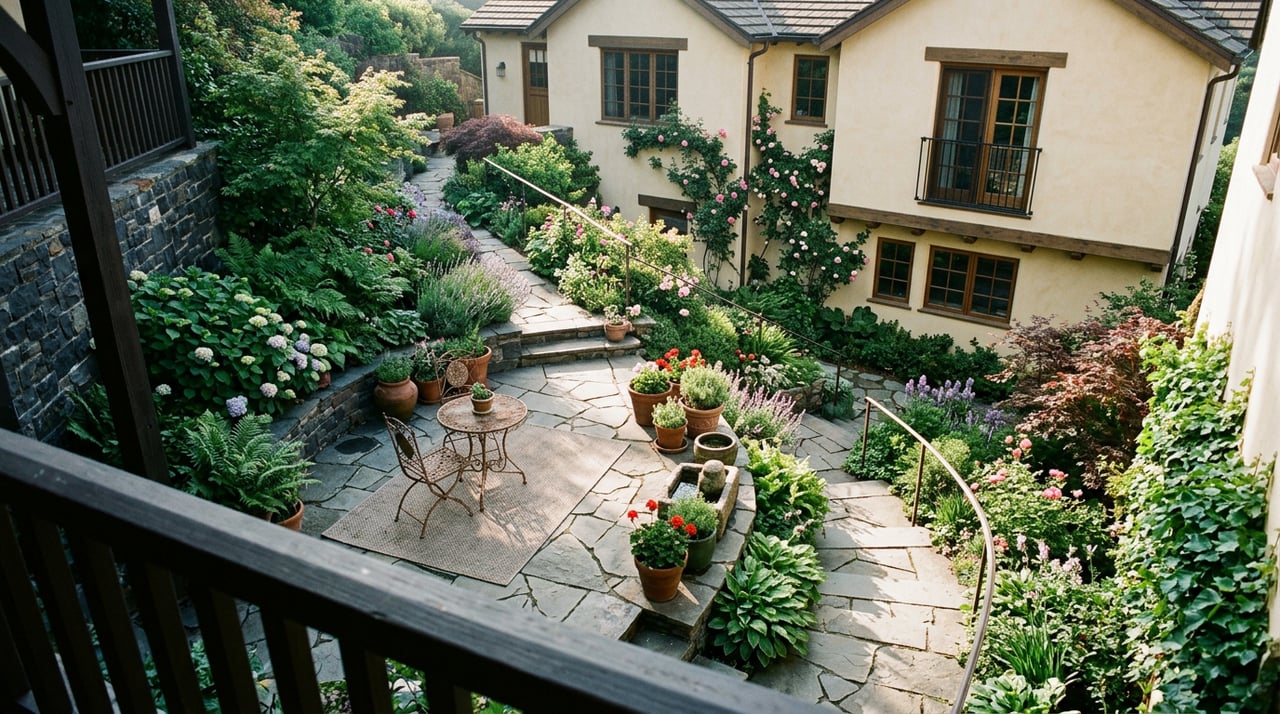
That trail leads to the Niguel Botanical Preserve, an 18-acre garden tucked into the hillside behind the amphitheater. It's easy to miss because nothing about the park's layout points to it. You park near the pool, you walk past the terraced concert seating, and the entrance sits just above the grass, unmarked enough that thousands of regular park visitors never notice it's there. But the bigger reason people skip it isn't location. It's that most residents think of it as a garden you visit once, out of curiosity, the way you'd check off a scenic overlook on a road trip. What the Preserve actually is runs closer to a small museum with a working events calendar, and knowing that calendar is what turns a maybe-someday walk into a reason to go this particular week.
The Preserve is organized around plants from five regions of the world that share California's Mediterranean climate: coastal California and Northwestern Baja, Central Chile, Southern and Southwestern Australia, the Cape region of South Africa, and the countries ringing the Mediterranean Sea itself. The idea, going back to the garden's founding, was practical as much as ornamental: show residents what actually thrives here without heavy irrigation, using plants pulled from other parts of the world that get the same hot dry summers and mild wet winters Orange County does.
Wander the paved paths and you'll pass through distinct sections rather than one continuous planting bed. There's a South African-themed area that opens onto what many longtime visitors consider the best view in the entire garden. There's a Children's Garden built for smaller hands and shorter attention spans. And at the very top of the hill sits the Laguna Niguel Labyrinth, which looks at first glance like a formal garden feature and turns out to have a much more specific story behind it.
The Preserve started in 1981 as a community vegetable garden, tended by local volunteers before Laguna Niguel was even its own city. Three years later, in 1984, that volunteer effort formalized into a 501(c)3 nonprofit, and in 1989 the group adopted a Master Plan that set the direction for the drought-tolerant showcase garden that exists today. Every plant in the ground, every path repair, every mulch delivery still happens because volunteers show up and do it. The organization runs 2nd Saturday volunteer mornings year-round, open to anyone willing to meet at the top of the amphitheater and spend an hour weeding or planting, and its largest single event each year is an Earth Day push every April that pulls in 150 to 200 volunteers for one coordinated planting day.
The Preserve also partners formally with a specific set of local organizations: the Boy Scouts and Girl Scouts, the City of Laguna Niguel, the Laguna Niguel Chamber of Commerce, the Laguna Niguel Lions Club, the Laguna Niguel Rotary Club, and the Moulton Niguel Water District. That list matters because it explains why the garden looks the way it does. This isn't a city department maintaining a public amenity on a fixed budget. It's a coalition of local groups treating an 18-acre hillside as an ongoing shared project, which is also why it has a real calendar instead of just posted hours.
Here's where the "just a garden" framing falls apart. The Preserve schedules themed walks and volunteer events throughout the year, and fall 2026 has three on the books:
| Date | Event | What It Is |
|---|---|---|
| September 19, 2026, 11 a.m. | Forest Bathing & Labyrinth Walk | A guided slow walk built around the labyrinth at the summit |
| October 18, 2026, 1 to 2:30 p.m. | Medicinal Plant Walk | A guided walk through plantings used historically for medicinal purposes |
| November 14, 2026, 9 to 11 a.m. | Fall Planting Volunteer Event | A hands-on planting and mulching morning, smaller in scale than the April Earth Day event |
None of these require membership to attend, and none of them cost anything beyond showing up. If you've been meaning to see the Preserve for the first time, or the fiftieth, the Forest Bathing & Labyrinth Walk later this month gives you a specific reason to make it this particular Saturday instead of some indefinite future weekend.
Most of what's on the hill developed gradually over decades of volunteer work. The labyrinth at the top is different. It was installed in 2010 by Marty Kermeen of Labyrinths in Stone, a specific commission with a specific completion date, and it measures 45 by 24 feet in an oval layout. At its center sits bougainvillea, which happens to be Laguna Niguel's official city flower, planted there deliberately rather than as an afterthought.
A labyrinth isn't a maze. There are no dead ends and no wrong turns, just a single winding path that leads to the center and back out again, designed as a walking meditation rather than a puzzle. From the top, the view opens across the Saddleback Valley, which is part of why the September 19 Forest Bathing walk is built around this exact spot rather than any other section of the garden.
Walk the eastern side of the garden and you're walking through youth scouting history as much as botany. The Boy Scout Trail to Eagle contains roughly two dozen completed Eagle Scout service projects, each one a permanent structure or planting bed built by a scout candidate as part of earning Eagle rank. The Girl Scout side of the garden includes a Tree Grove where flags represent countries belonging to the World Association of Girl Guides and Girl Scouts, along with a wishing well and a butterfly garden that came out of Girl Scout Silver Award projects. There's also a Girl Scout Amphitheatre used for troop award ceremonies.
None of this happened by accident. It's the direct result of the Preserve's formal partnership with both scouting organizations, which gives local troops a standing place to complete service projects and gives the garden decades of built infrastructure it never would have had to fund on its own.
The other detail that separates this from a garden you visit once is where the trail actually goes. A paved path at the bottom of the Preserve connects directly to Laguna Niguel Regional Park, the 236-acre park with the lake, fishing areas, and picnic grounds that most residents already know well. That means you can park once at Crown Valley Park, walk up through the Preserve, take in the labyrinth and the South African Overlook, and come back down on the connector trail into an entirely different park experience, all without moving your car.
A few practical details worth knowing before your first visit, or your next one:
Crown Valley Park itself draws more than 240,000 visitors a year between the pool, the YMCA, the sports fields, and the recently renovated amphitheater that hosts the city's Summer Concert Series. The Preserve sits quietly above nearly all of that traffic, running its own program on its own schedule, waiting for people who've driven past it a hundred times to finally walk up the hill.
If you're thinking about what it actually feels like to live in a particular corner of Laguna Niguel, day to day, this is the kind of detail that doesn't show up on a property listing. It's also exactly the kind of neighborhood texture Judy Parsons builds into every conversation with clients considering a move here. If you're weighing a purchase, a sale, or just want a local's read on a specific street or community, book a complimentary home strategy session and we'll talk through what matters most for your situation.
Get assistance in determining current property value, crafting a competitive offer, writing and negotiating a contract, and much more. Contact me today.
JUDY PARSONS | CA DRE# 02191105
33522 Niguel Rd Dana Point CA 92629